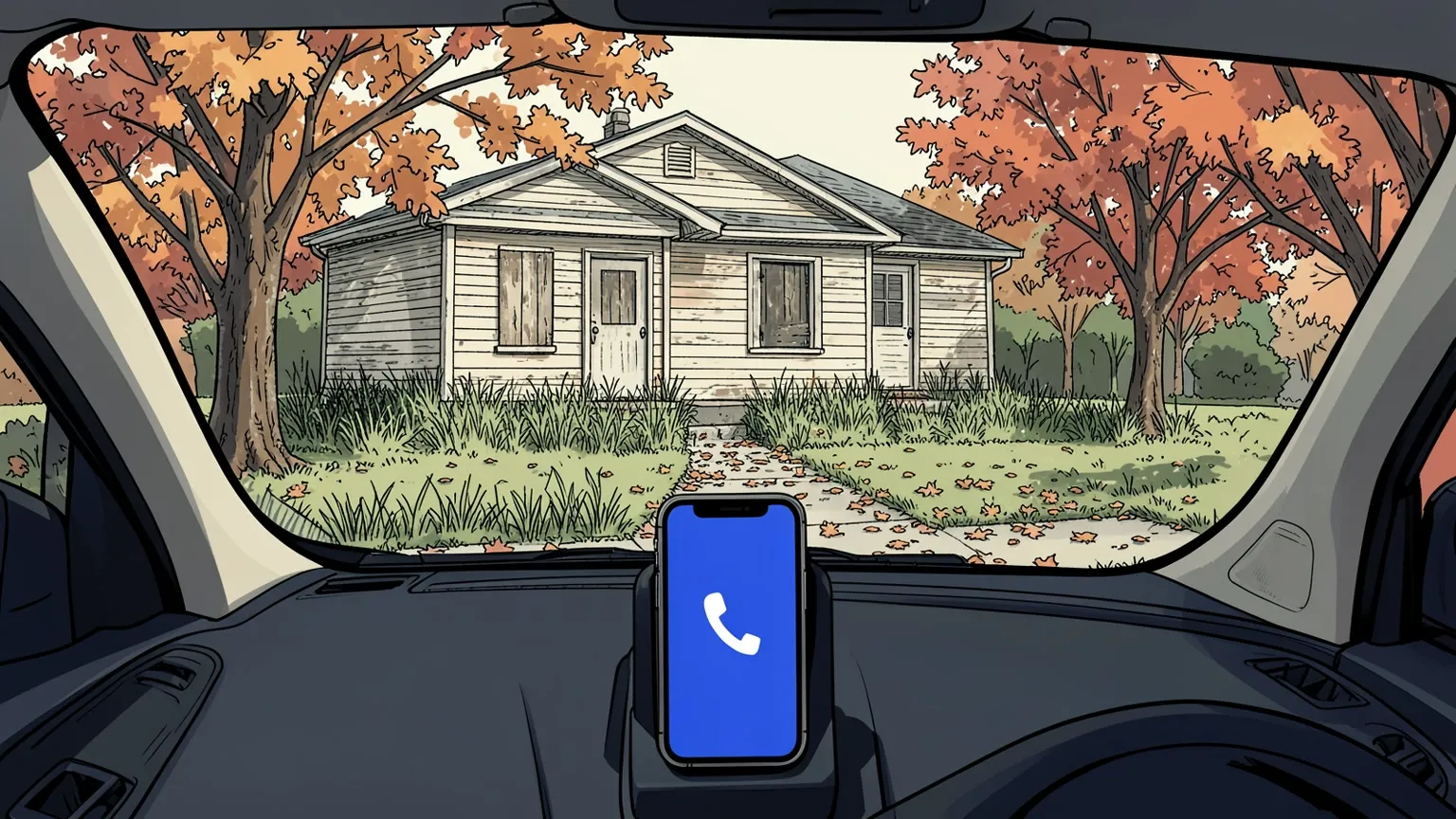
How to approach calling vacant property owners
When you are calling vacant property owners, find out why the house is empty before you say anything about buying it. An empty house always has a story: a move, a death, a tenant who left, or a loan the owner stopped paying. That story decides the whole call. Open with the property, ask one easy question about how it is going, and let the owner tell you what the empty house is costing them. The offer comes after that, not before.
The rest of this post shows how to run that call. It covers who is really on a vacant list, the opener, the questions that surface motivation, the common objections, and how to handle the owners whose empty house is also in foreclosure.
Who is on a vacant list
A vacancy flag tells you the house looks empty. It does not tell you why. Most vacant lists mix four kinds of owner, and each one needs a different call.
- The owner who moved and kept it. They bought a new home and never sold the old one. They may be paying for two houses at once. If they live in another state, the tips in calling absentee owners apply too.
- The landlord between tenants. The last tenant left, the unit needs work, and the owner keeps putting it off. They are often tired, not broke.
- The heir. A parent died and the house sits while the family decides what to do. Slow down here. The tone in calling inherited property owners fits these calls.
- The owner who walked away. They fell behind on the mortgage and left before the foreclosure finished. This is the hardest call on the list, and it gets its own section below.
You will not know which owner you have until you ask. So treat the first minute of every call as discovery.
How common empty houses are, and why your list goes stale
Vacant houses are a small slice of the market, which is why a clean list matters. ATTOM's Vacant Property and Zombie Foreclosure Report, released October 29, 2026, puts the national picture like this:
| Measure (ATTOM, Q4 2026 report) | Figure |
|---|---|
| Residential properties that were vacant | 1.2 percent |
| Properties in the foreclosure process | 269,195 |
| Foreclosures abandoned by the owner ("zombies") | 3 percent, or 8,040 properties |
| Homes held by institutional investors that were vacant | 2.7 percent, or 840,384 |
Two things follow for a caller. First, a vacant list is thin, so every record is worth a careful call. Second, vacancy changes fast. A house that was empty when the list was pulled may have a new tenant, a new owner or a contractor inside by the time you dial. Confirm the status early in the call instead of assuming it.
The opener: name the house, ask how it is going
Say who you are, say the street, and ask whether it is a bad time. Then ask about the house, not about selling. A line that works: "I noticed the place on Maple looks empty right now, so I wanted to ask how it's going with it."
Three rules keep the opener honest and short:
- Do not accuse. "Your house is vacant" sounds like a code officer. "It looks empty right now" leaves room for the owner to correct you.
- Ask a question they can answer in one sentence. "Is it between tenants, or are you not using it right now?" gets a real answer. "Do you want to sell?" gets a hang-up.
- Listen for the cost. A broken window, a lawn the city complained about, a bill for a house nobody lives in. That complaint is the reason to keep talking.
The rest of the call runs in the same order on every list. Our cold calling script for investors walks through it beat by beat.
Questions that surface the real cost of an empty house
An empty house keeps costing money. Taxes, insurance, utilities and upkeep do not stop because nobody lives there. Your questions should let the owner add that up out loud.
- "How long has it been empty?"
- "Who checks on it for you?"
- "Does your insurance company know nobody is living there?" Many homeowners policies limit coverage once a house sits empty for a stretch (the Texas Department of Insurance homeowners guide explains how vacancy affects coverage), so owners are often unsure. Do not give insurance advice. Just ask, and tell them to check their policy.
- "What is the plan for it: rent it, fix it, or let it go?"
- "If it did not need anything from you, would you keep it?"
The last two questions do the most work. They hand the owner control, and they tell you whether you are talking to a seller or a holder. Some cities also run vacant building registration programs with their own rules and fees. If the owner mentions a letter from the city, ask what it said. It is often the trigger that makes the call worth having.
Objections you will hear from vacant-house owners
| What they say | What is often behind it | What to say back |
|---|---|---|
| "It's not vacant." | Your data is stale, or they feel judged. | Apologize, ask what is going on with it now, and update the record. |
| "I'm going to fix it up." | A plan they have not started. | Ask when they plan to start and what is holding it up. Offer to check back after that date. |
| "My family wants to keep it." | The decision is not theirs alone. | Ask who else decides and whether it would help to talk with everyone at once. |
| "It needs too much work to sell." | They think nobody will buy it as-is. | Explain that you buy as-is, then ask what they think it needs. |
| "Just send me an offer." | A polite exit. | Say yes, then ask one question: what number or timing would make an offer worth reading? |
None of these needs a clever rebuttal. Each one needs a question that keeps the owner talking.
When the empty house is also in foreclosure
Some owners on a vacant list left because they could not pay. ATTOM counts these as zombie foreclosures in the report above. These owners often feel shame and fear, and many expect your call to be a scam. Your job on this call is to be calm, clear and slow.
- Say plainly who you are and that you buy houses. Never suggest you work for the lender or a government agency.
- Do not promise to stop a foreclosure, save their credit or fix their loan.
- Encourage them to talk to their lender or a HUD-approved housing counselor. Then explain what a sale to you would look like if they choose it.
The exact words matter here. What not to say to a pre-foreclosure homeowner lists the lines to cut. The calling rules matter too. Federal rules bar telephone solicitations to a residential subscriber before 8 a.m. or after 9 p.m., local time at the called party's location, and to numbers on the National Do Not Call Registry (47 C.F.R. § 64.1200(c)). An empty house does not mean the owner's phone is somewhere else in your time zone. For the full picture on distressed lists, see TCPA and DNC rules for calling pre-foreclosure lists, and check your state's rules too.
Getting to a number without guessing
Vacant houses are hard to price over the phone. Nobody has been inside for a while, and the owner may not know the condition either. Ask what they know: roof, water, heat, any break-ins. Then be honest that you need to see it, or get photos, before your number is firm.
Have the math ready anyway. The free MAO calculator takes ARV, repairs and your fee and gives you a maximum offer before you dial. On the call itself, CallVisor shows the property facts, value and tax history next to the live transcript, and its coach suggests the next line, so a caller can stay on the owner's story and still have a starting point. For the full method, read making the offer on the call.
Frequently asked questions
Are vacant property owners motivated sellers? Some are, many are not. An empty house costs money, but some owners hold on purpose. Ask about their plan for the house before you decide.
Should I call or knock on the door? Nobody answers the door at an empty house. A call or letter reaches the owner where they live now. Use the property visit to judge condition, not to find the owner.
How do I find the owner's phone number? Start with the owner of record and their mailing address, then match a phone number to that person. Our guide on how to find seller phone numbers walks through it.
What if the owner has died? Ask, gently, who is handling the house now, and treat it as an inherited-property call.
Telemarketing, foreclosure and wholesaling rules vary by state and change over time. This article is general information, not legal, financial, or investment advice. Real Invest Republic / CallVisor is not liable for decisions made based on it. Consult a qualified professional (attorney, CPA, or licensed advisor) about your specific situation at your own discretion.
Vacant lists reward the caller who listens first and prices second. Start Free Trial to put live coaching and property data on every dial.
- vacant properties
- pre-foreclosure
- cold calling
- objection handling
- wholesaling