How to coach cold callers you can't listen to
Coach cold callers you can't listen to by sampling a handful of their calls at random, then scoring that sample against a written rubric so the standard doesn't live only in your head. Find the one or two gaps that repeat across the sample and send the correction back fast, before the next batch of calls.
The problem: you're coaching from a sliver of the evidence
Once your acquisition floor grows past a couple of seats - especially if those seats are offshore VAs in another time zone - you stop hearing the calls. You are still paying for every dial, still on the hook for every seller conversation, but the raw material you would coach from goes by unheard. Industry QA benchmarks make the gap concrete: manual review typically covers just 1 to 3 percent of total call volume, because that is the realistic ceiling for a human sitting and listening (The AI QMS, Krisp). So the honest starting point for anyone trying to coach cold callers you can't listen to is that you were never going to listen to most of them anyway. The job is not to hear everything. It is to build a system that turns a small, deliberate sample into coaching that actually changes next week's dials.
Stop trying to listen to everything - sample on purpose
The instinct when quality slips is to promise yourself you will "start listening to more calls." You won't, and even if you did, unstructured listening tells you about the one call you happened to hear, not about the rep. Replace it with deliberate sampling. Contact-center QA research converges on a small, workable number: more than half of teams evaluate one to five calls per agent per month and about a third do six to ten (Call Centre Helper). Five to six per rep is a common sweet spot - enough signal to spot a pattern without eating your whole week. Two rules make the sample honest: pull the calls at random, not the rep's best or most recent, and bump newer reps or anyone on a plan up toward ten to fifteen. Grading only the calls that already went well is how you end up certain everything is fine while deals leak.
Write the standard down before you coach anyone
You cannot coach against a standard that lives only in your head, and a VA three time zones away definitely cannot. Put the standard on paper as a scorecard - a fixed rubric applied the same way to every sampled call. For a wholesaling acquisition call that means scoring the shape of the conversation, not a generic sales checklist: the open (context set in the first 15 seconds), discovery (timeline, why now, what happens if it doesn't sell), condition (roof, systems, occupancy), objection handling (staying in the conversation on "I need to think about it"), and a clear next step. Keep one line as a hard pass or fail: no pressure tactics, honest representations, correct handling if a seller asks to be taken off the list. Scored this way, "quality" stops being your mood on the day you happened to listen and becomes something a rep - or a reviewer who isn't you - can apply consistently.
Coach the pattern, not the call
The mistake that kills remote coaching is dumping ten corrections on a rep from one call you finally got around to hearing. Do the opposite. Across the sample, find the one or two gaps that repeat - the rep talks past the first "no," or never pins a real next step - and coach only those until they move. And get the feedback back fast. Research on skill acquisition consistently finds that for procedural skills like handling a live conversation, feedback delivered close to the behavior helps most, reinforcing the correction "before errors become entrenched" into habit (ScienceDirect / Feedback Intervention Theory review). A monthly summary of last week's calls is too slow to change next week's dials. On a distributed floor, "fast" means a short written note or a two-minute clip within a day, not a scheduled call that waits for overlapping hours.
Make the reps grade themselves
The highest-leverage move when you can't be on the calls is to push some of the judgment onto the reps. Have each rep self-score one of their own calls against the same scorecard before your coaching note. Comparing a rep's self-score to yours is often more useful than the score itself: it tells you whether the rep can even hear their own gap. A rep who scores their own missed next step as a win has a perception problem you fix differently than a skill problem. This scales in a way listening never will, and it builds the self-evaluation habit that keeps a remote rep improving between the calls you actually review.
Where whisper, barge, and live monitoring fit - and where they don't
Traditional call centers lean on supervisor whisper (coaching in the rep's ear mid-call) and barge (jumping onto the line). They work, but they assume a manager sitting live on the floor during the shift - exactly the person a coachless fleet boss doesn't have, and impossible across a VA team spread over three time zones. That is the real constraint: the bottleneck isn't the technique, it's your presence. Which is why the durable answer for a small, distributed acquisition floor is not "be on more calls." It is a standard on paper, a deliberate sample, self-scoring, and fast pattern-level feedback - a loop that runs whether or not you are awake when the dials happen.
Scaling past what your ears can cover
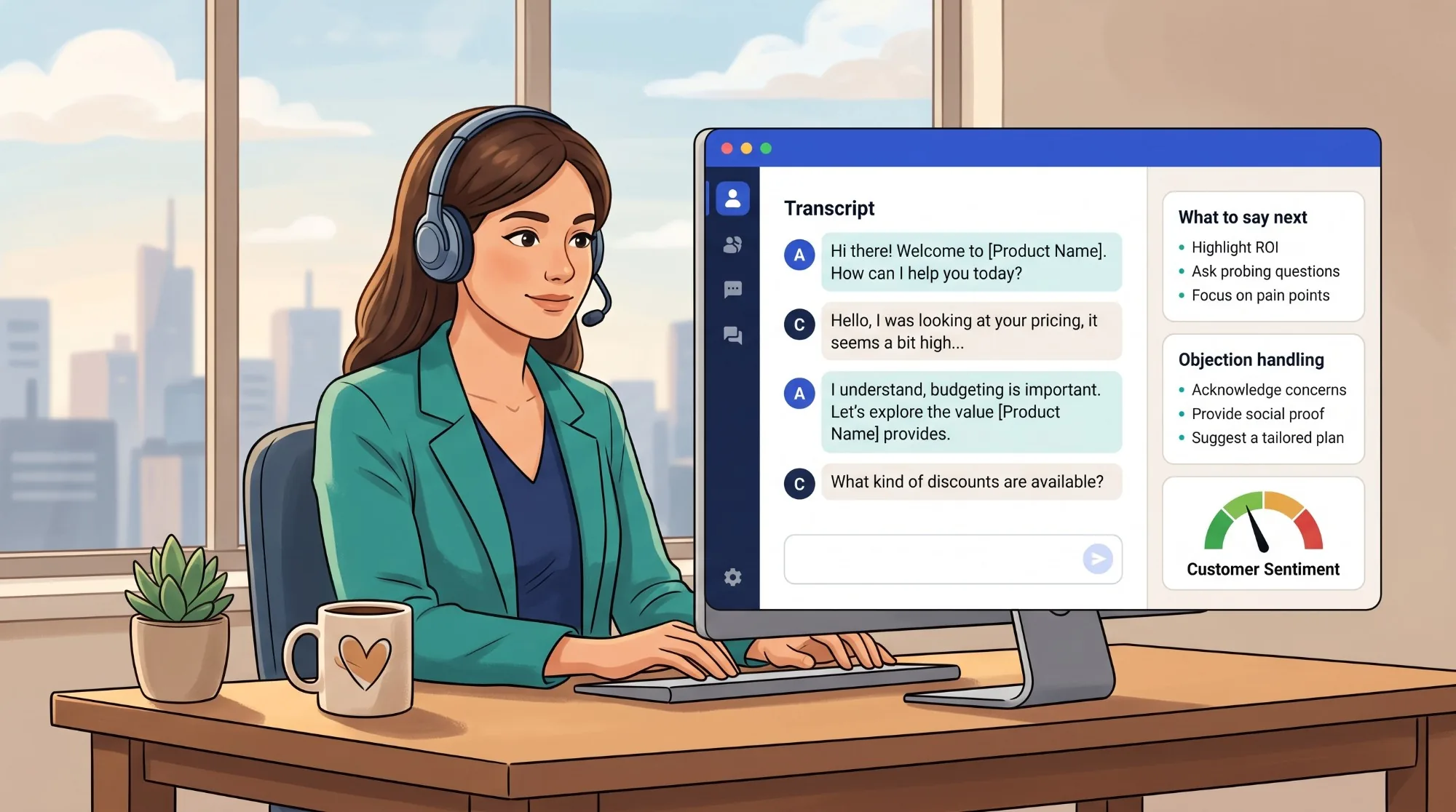
Even a disciplined sample tops out around that 1 to 3 percent. The only way to grade every call is to take the manual listening out of the loop. This is the gap CallVisor is built for on a wholesaling floor: it scores every dial against a rubric like the one above and coaches the rep in real time on the call, so the QA layer doesn't depend on you finding four spare hours a week or overlapping with a VA's shift. You still own the standard and the coaching conversation - the tool just makes sure no call goes ungraded and no correction waits a month. For the broader stack around this, see what tools real estate investors use to manage cold calls, and for the in-the-moment half of the loop, how AI coaching works during a live sales call. If growing past what your ears can cover is the actual constraint, coaching and ramping reps at scale is the piece built to remove it.
Frequently asked questions
How do I coach VAs in a different time zone? Asynchronously and in writing. Sample a few calls, pick one recurring gap, and send a short note or a clipped 90-second stretch of the call with the fix - within a day, not on a weekly sync that has to wait for overlapping hours. Have the VA self-score first so the note lands on a gap they are already looking at.
How many calls should I actually review per rep? Five to six a month for a steady rep is a defensible sample; ten to fifteen for new hires or anyone on a plan. Pull them at random, not from the rep's best work, or the sample tells you nothing about where deals are leaking.
Isn't a scorecard overkill for a two-person floor? At two seats you can still hear most calls, so probably. The scorecard earns its keep exactly when you can no longer listen - which is the moment "coach the calls you can't hear" becomes the whole job.
If the thing killing your QA is that nobody can sit on every dial, that is the constraint worth removing - every call graded, coaching on the call, no manager required on the seat. Get Early Access to put it on your floor.
- cold calling
- coaching
- call quality
- real estate wholesaling
- acquisitions